Dixons Carphone Multiplay Design System
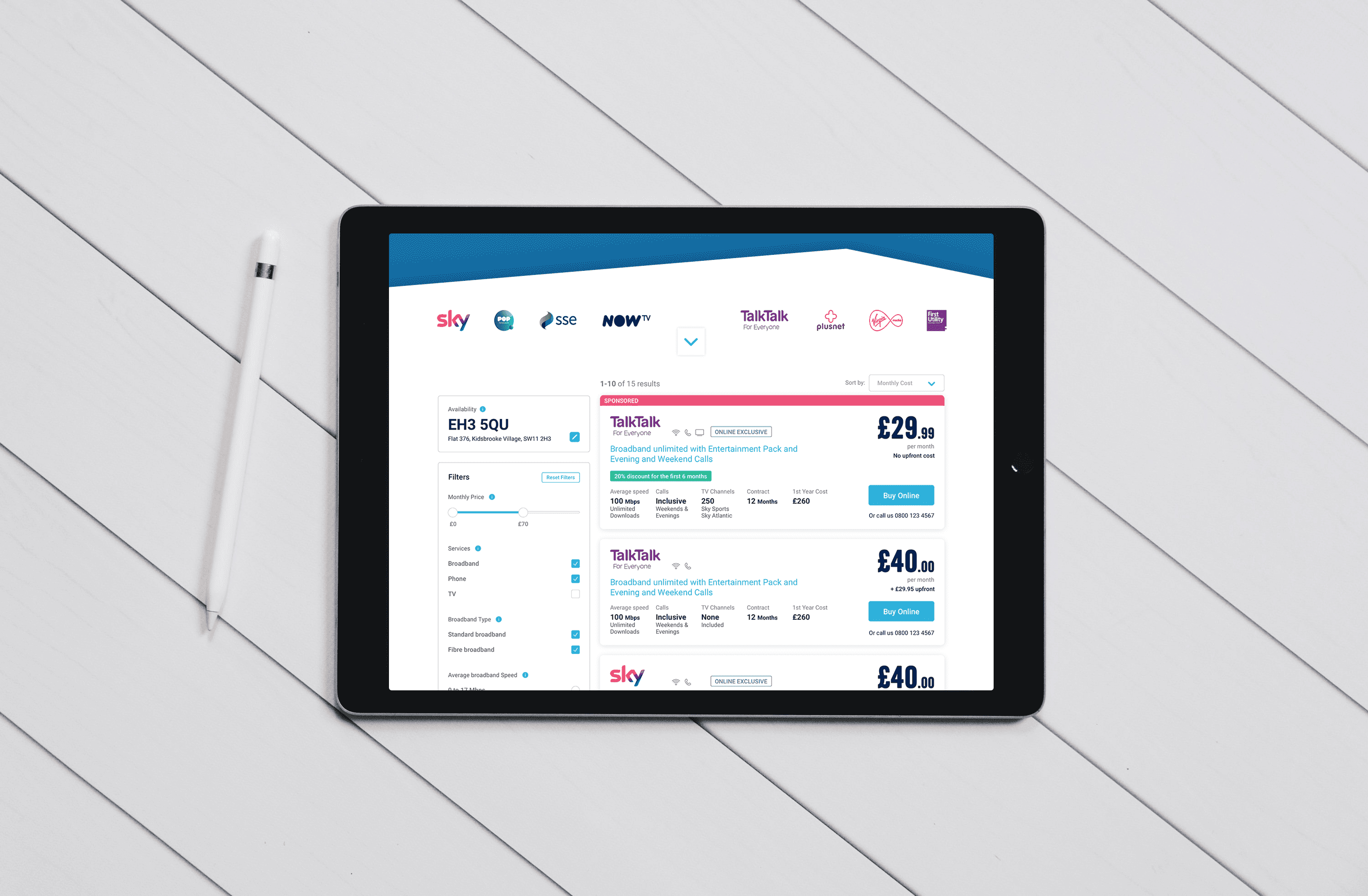
The TLDR
The Challenge:
Dixons Carphone (DCP) needed to build a design system to support their Multiplay comparison platform that could be deployed across multiple distinct brands in their portfolio without rebuilding from scratch each time.
The challenge wasn't just designing a product. It was designing a system that could evolve to support entirely different visual languages and brand identities from a single component foundation.
My Role:
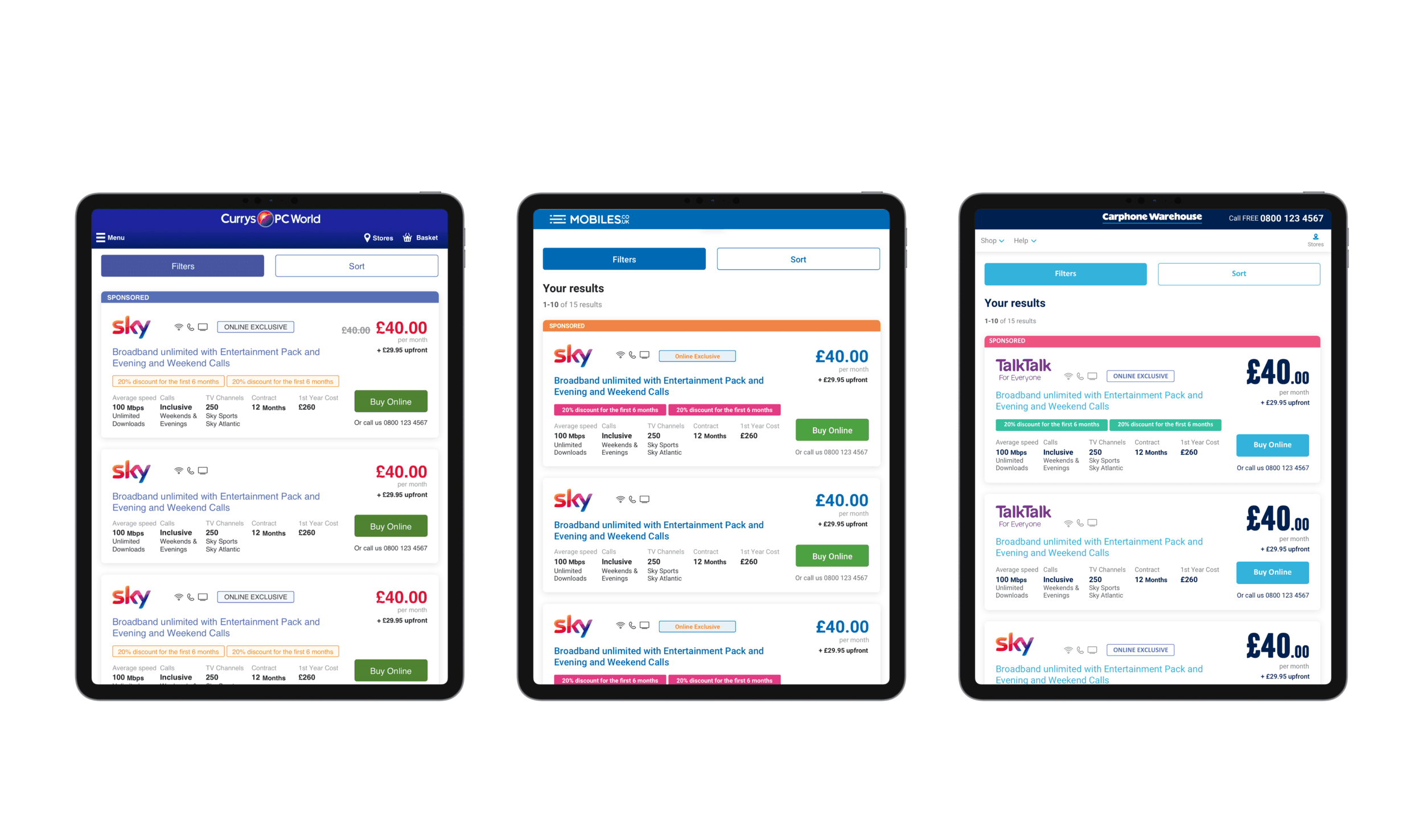
As Lead Designer, I architected and delivered a multi-brand design system for the DCP Multiplay platform, building a component library that could adopt and flex across the business portfolio, including Carphone Warehouse, Currys PC World and Mobiles.co.uk, each with their own distinct colour systems and visual language.
The Impact:
The design system delivered a fully themed, brand-compliant platform across three distinct brands from a single component library, laying the foundations for further brand adoption across the wider Dixons Carphone portfolio without the design process starting from scratch each time.
The challenge
Dixons Carphone's multiplay proposition — combining mobile, broadband and home telephone into a single comparison experience — needed to live across multiple brands in their portfolio. Carphone Warehouse, Currys PC World and Mobiles.co.uk each had their own distinct visual language, colour systems and brand personality. Yet the underlying product - comparing and switching telecoms services was experiential and structurally identical across all three.
The challenge wasn't to design three separate platforms. It was to design one system rigorous enough to underpin all of them, while remaining flexible enough that each brand felt authentically itself rather than a reskin of something else.
My role
As Lead Designer, I was responsible for the architecture and delivery of the multi-brand design system, from initial component strategy through to brand adoption and asset delivery across all three platforms. The work ran from 2018 through to early 2019.
Building for brand adoption from the ground up
Using the Atomic Design methodology in Sketch, I constructed the system from the ground up, defining components at the atomic level: colour tokens, typography scales, spacing systems, interactive states, and component variants. Critically, these foundational decisions were made brand-agnostic, the structure of every component was designed to accept different visual languages without requiring structural change.
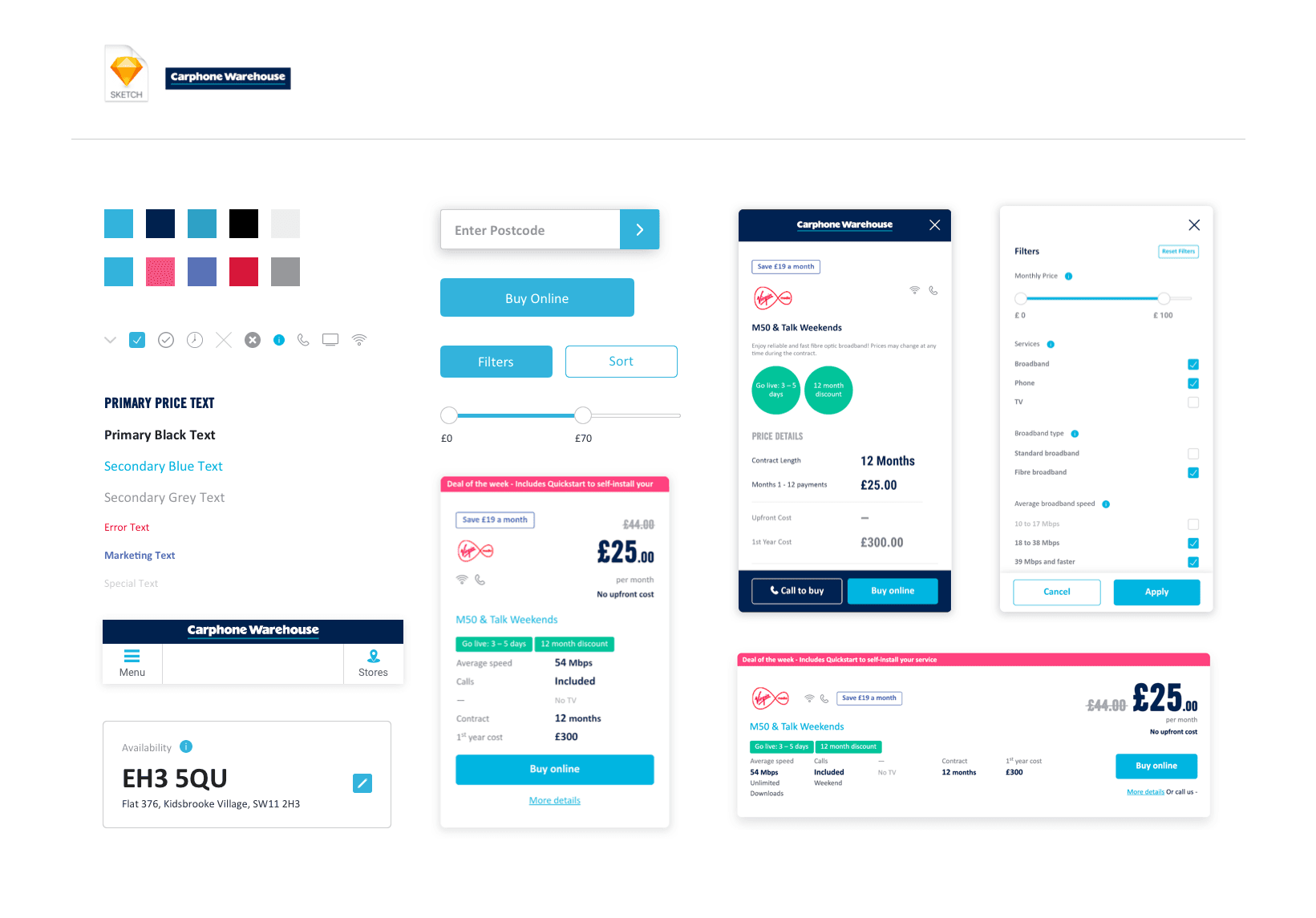
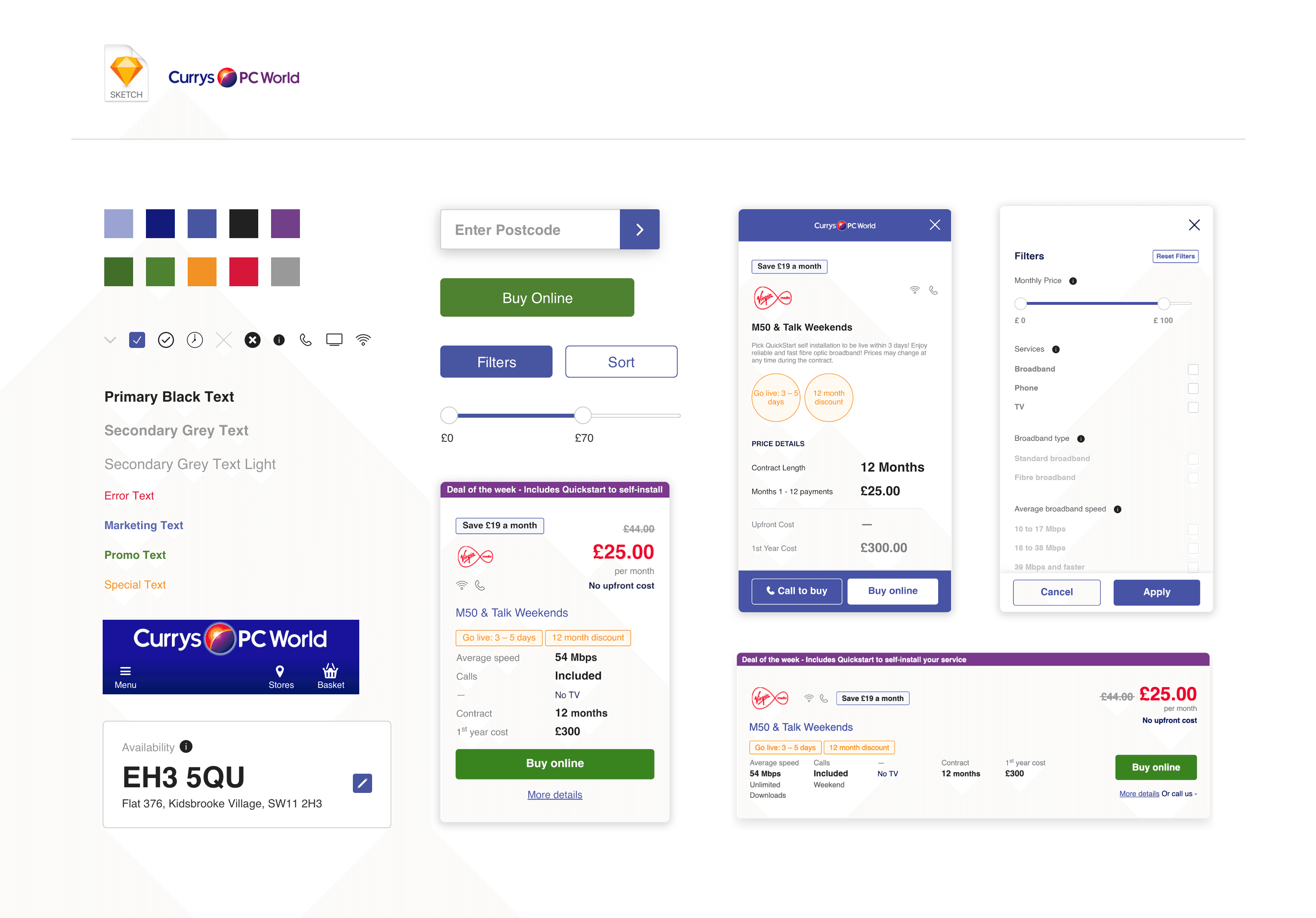
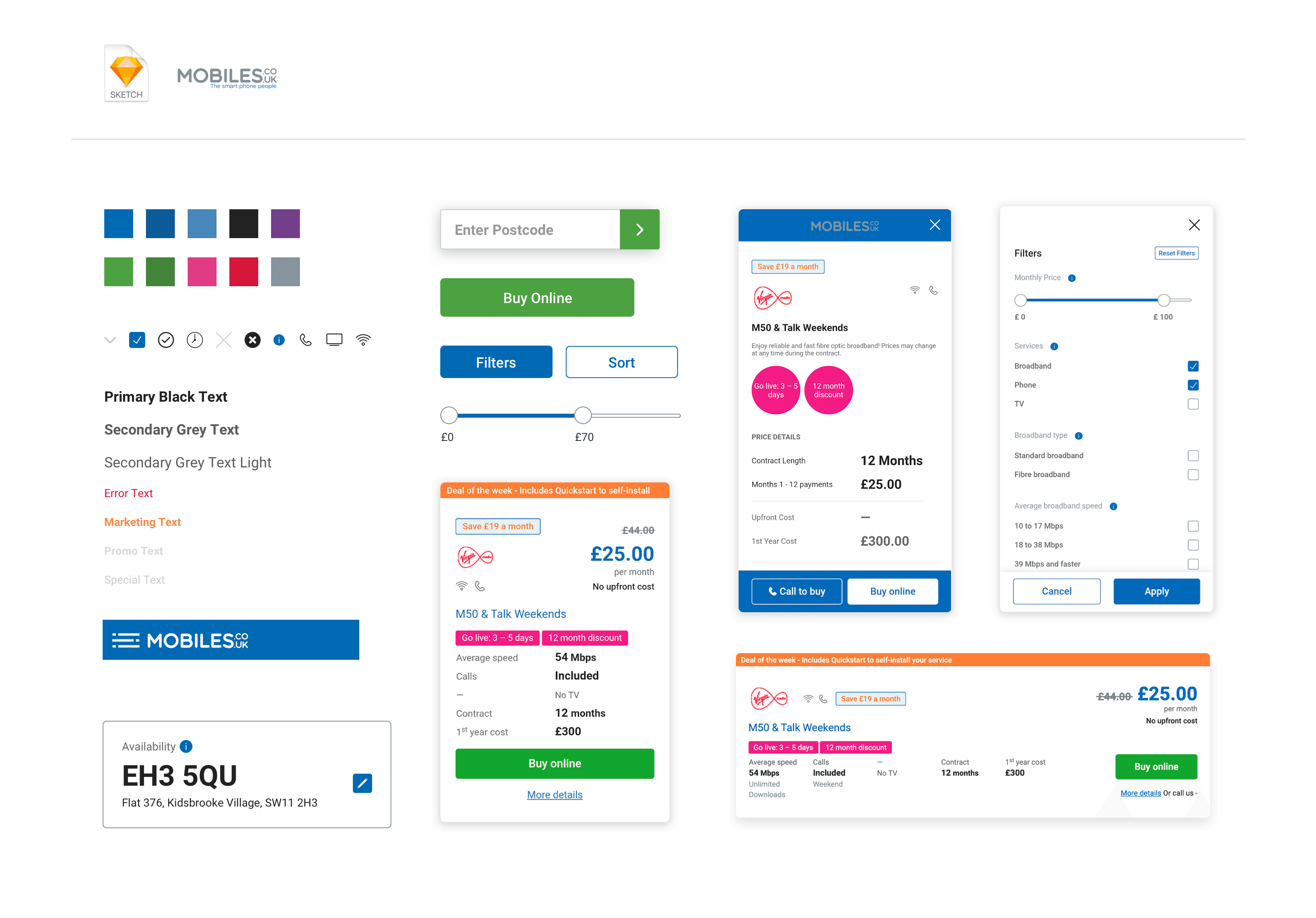
The result was a theming layer that sat on top of the shared component architecture. Each brand, Carphone Warehouse, Currys PC World and Mobiles.co.uk had its own distinct colour system, typographic personality and visual language. But all three drew from the same underlying component set.
Switching from one brand to another was a matter of applying the relevant theme, not rebuilding the interface.
What the system had to support
Each brand presented a distinct design challenge within the system:
Carphone Warehouse — the primary brand and the foundation the system was initially built around. Clean, direct, telecoms-focused.
Currys PC World — a retail-first brand with a bold, high-contrast visual language and a broader product audience. The system needed to accommodate its stronger colour palette and more assertive typographic style without compromising the structural integrity of the comparison components.
Mobiles.co.uk — a digitally-native, value-focused brand with a different tone and visual density to the retail brands. The system needed to flex to a lighter, more transactional aesthetic while keeping the comparison experience consistent and trustworthy.
Across all three, the core comparison components — package cards, filter systems, CTA patterns, form elements — remained structurally consistent. What changed was everything that made each brand feel like itself.
Launch and Impact
By December 2017, Dixons Carphone's multiplay proposition had grown to a 10% share of the UK switching market, cited in their official interim results. Carphone Warehouse held a 22% postpay mobile market share and a 78% brand consideration rating, the commercial context the design system was built to serve.

© 2026 Simon Wessely