Sky Go Redesign
TLDR
The Challenge:
Sky Go experienced a stagnating user base, and a disjointed experience across iOS, Android and web, whilst a new wave of on-demand competitors including Netflix gained ground in the UK.
My Role:
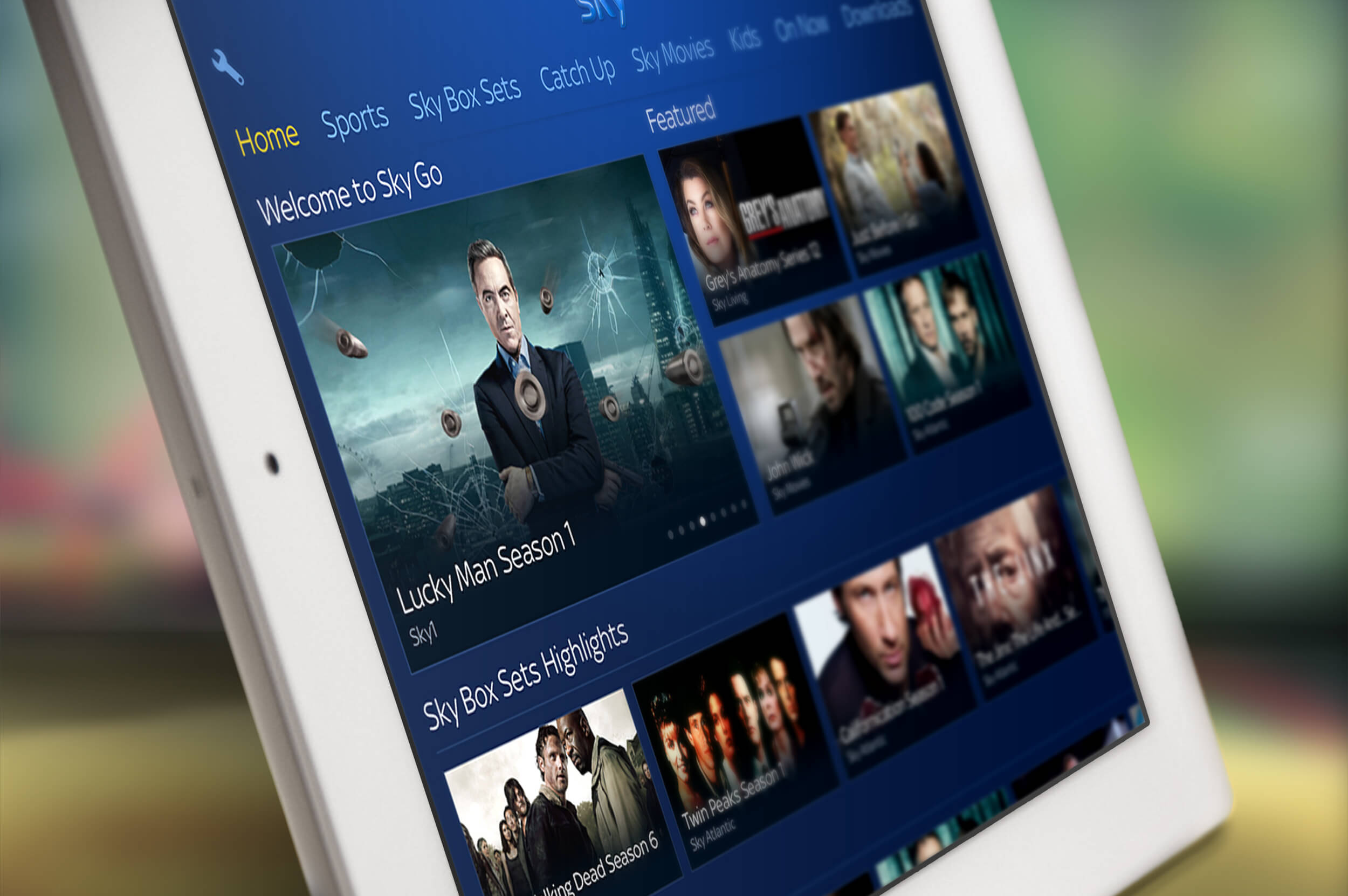
As Lead Product Designer within a small agile team, I led Sky Go's UI and UX redesign, including a new content-driven Homepage, unified cross-platform navigation, built upon a refined visual language aligned with the wider Sky brand.
The Impact:
"Biggest ever redesign" of Sky Go, with a more engaging and intuitive user experience.
Registered users grew from 5.8M to 10M (+72%) over the period of 2016 spanning the redesign.
The redesign also delivered a positive app store rating boost, with an average of 4.0, up from 2.9 at the start of the project.
The problem
Sky Go experienced a stagnating user base, and a disjointed experience across iOS, Android and web, whilst a new wave of on-demand competitors including Netflix gained ground in the UK.
Sky Go had a problem that good content alone couldn't fix.
When work began in late 2014, Sky Go carried an average 2.9 star rating across the App Store and Google Play.
User complaints were consistent across both platforms: a poor and unresponsive interface, hard-to-navigate content, and a disjointed experience across devices. This sat against a backdrop of growing competition from Netflix and other on-demand services entering the UK market.
While Sky Go's user base had grown from 3.7 million to 5.8 million registered users by early 2015, the product experience told a different story.
Fragmented, inconsistent, and falling behind a market that was rapidly changing.

Discovery
Customer research gave us a clear picture of the frustrations.
The App's landing experience was passive, focusing too much on Live TV viewing. This required users to work hard to surface On Demand content they'd actually want to watch.
Navigation behaviour was also inconsistent depending on which platform you were on, creating a disjointed sense of the product.
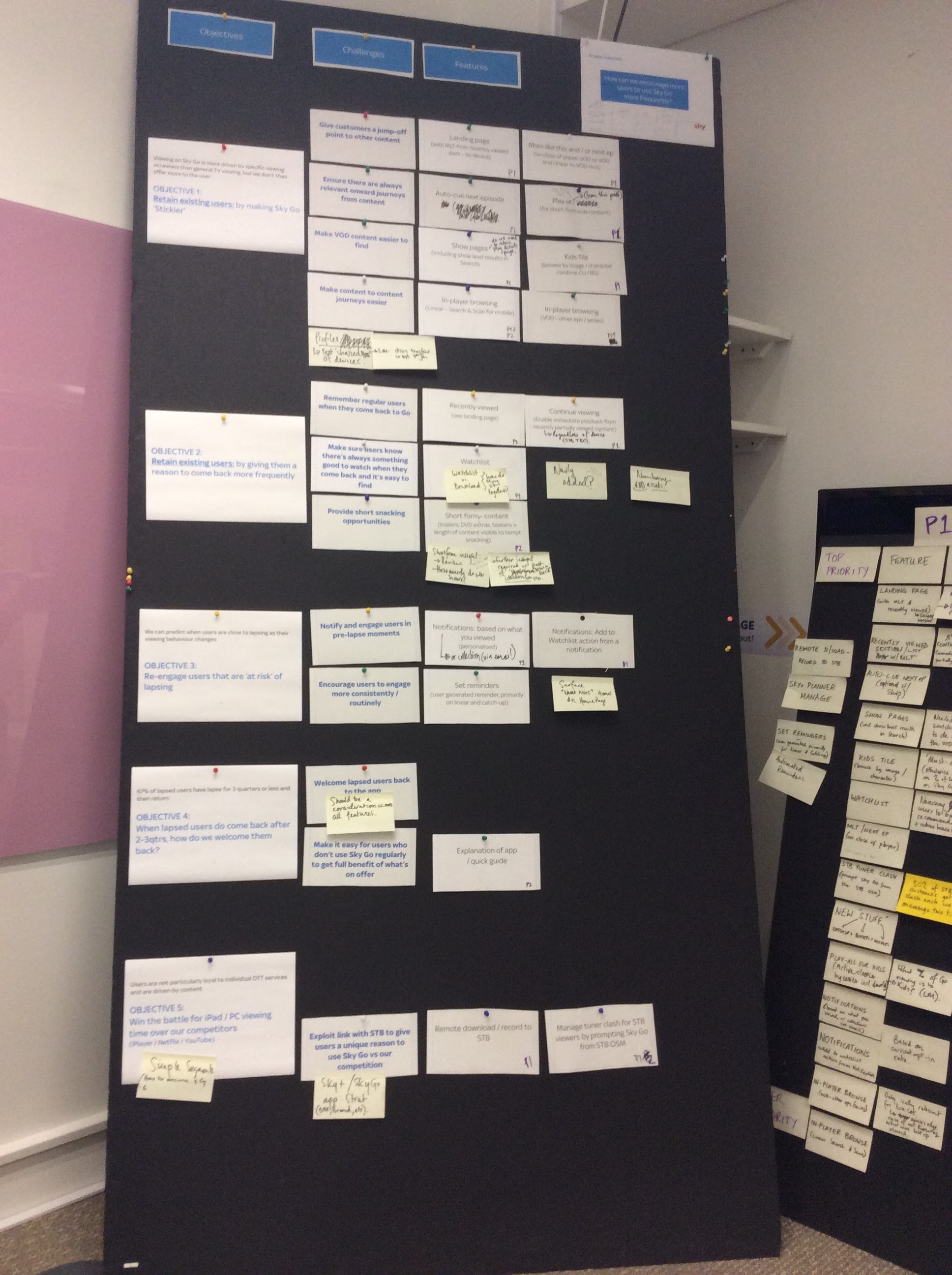
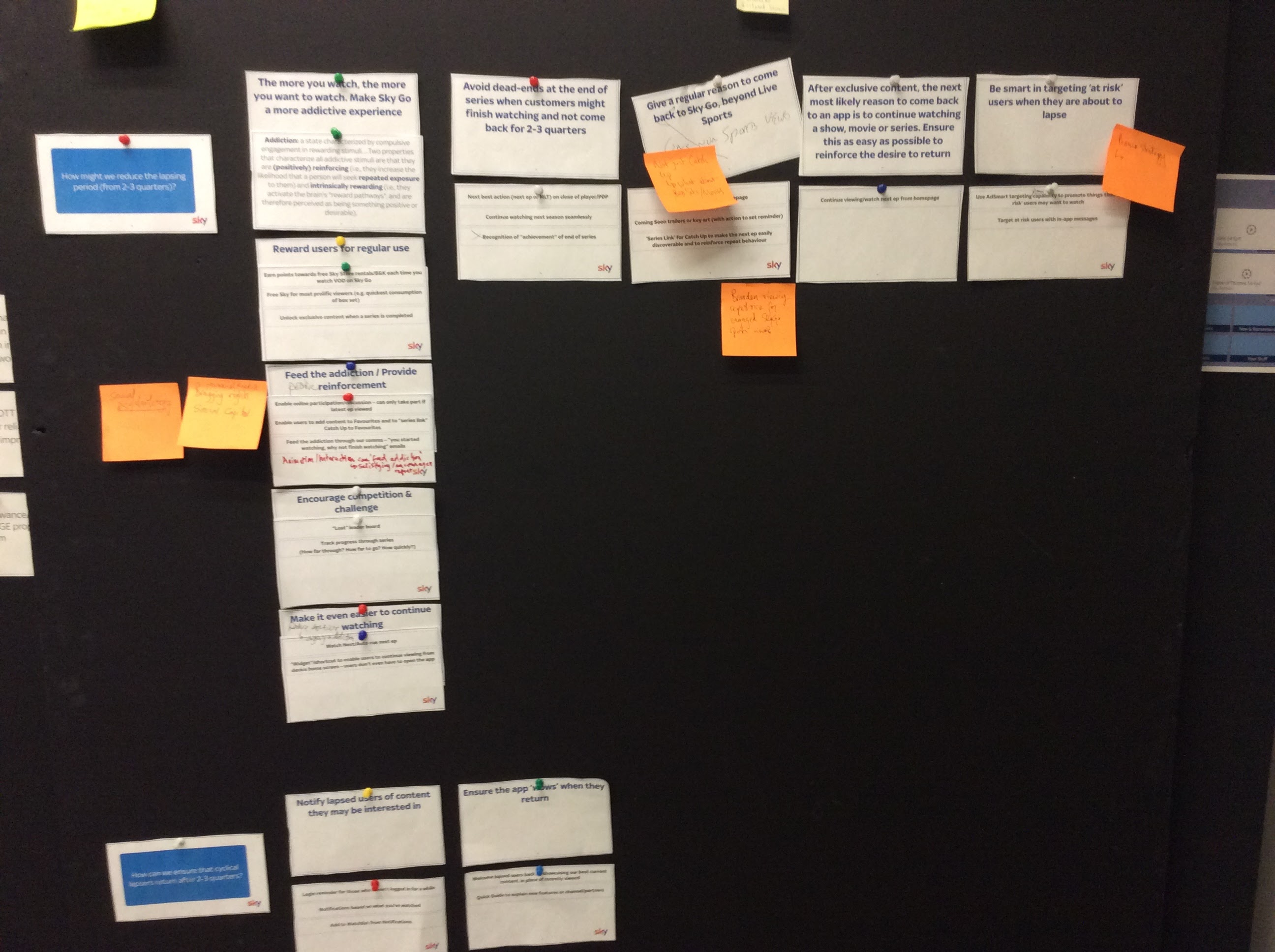
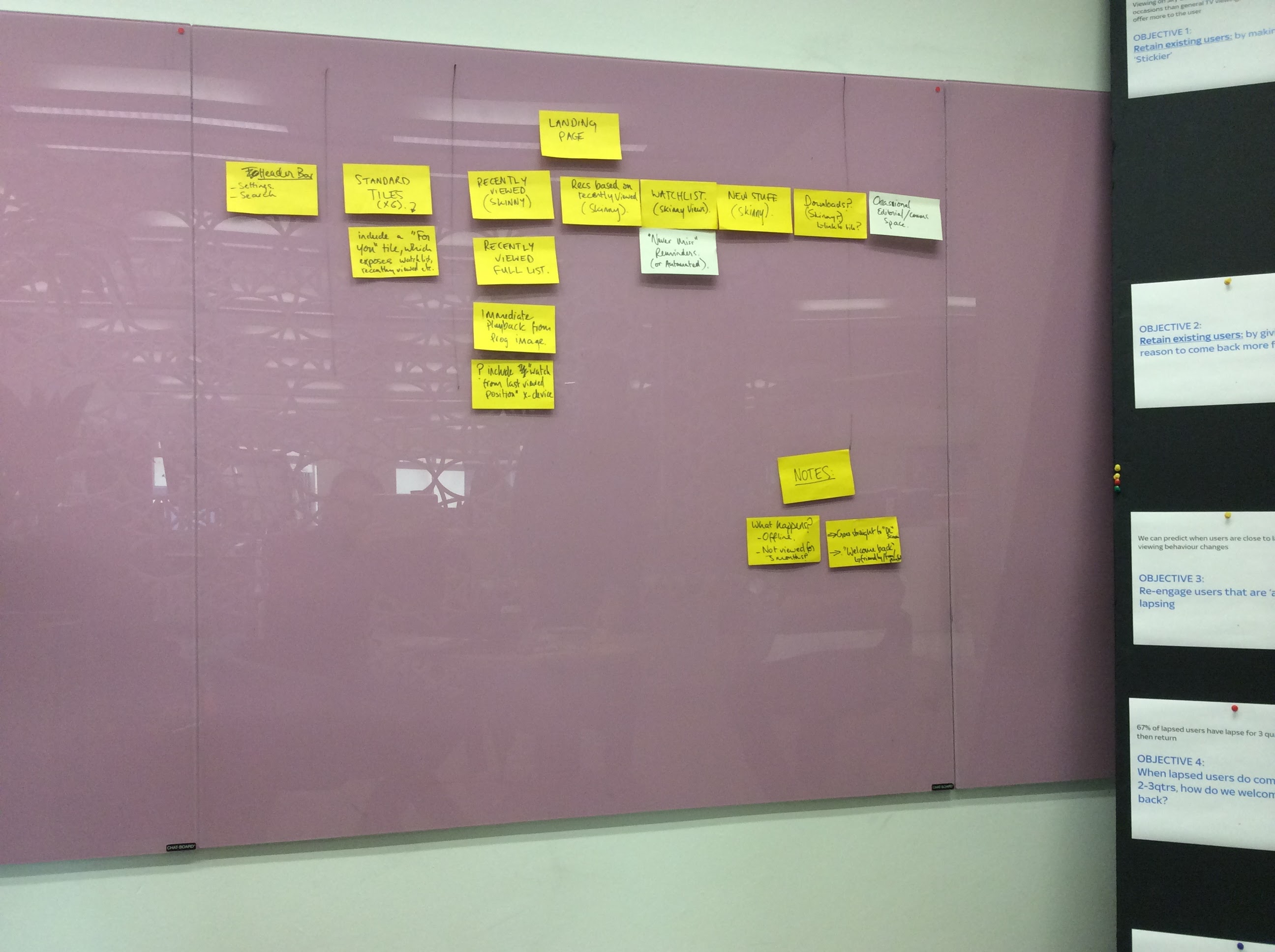
We used journey mapping to analyse the insights and identify the specific moments in the experience that needed reimagining. Three areas rose to the top:
- The Homepage was passive, live TV-focused experience.
- Cross-platform identity was inconsistent across iOS, Android and Web
- Content hierarchy made users work incredibly hard to find something worth watching.
A redesign built around three clear goals:
To make Sky Go the preferred destination to watch world class content
Unified cross-platform Homepage that maintained structural identity across iOS, Android, web and console
A refined visual language aligned with the wider Sky brand, bringing a premium, cinematic aesthetic to the product
Hardest decisions
The most contested design challenge within the Product team was the Homepage itself. Specifically, how to balance breadth of content against the immediacy of discovery, whilst ensuring that big Sky exclusive events, such as Premier League football, were given the prominence they deserved.
Sky Sports represented one of Sky Go's most compelling differentiators. The ability to watch live sport on the move was a core reason customers subscribed.
The Homepage needed to honour that, making Sky Go the preferred destination for premium sports content whilst on the move, without sacrificing the discoverability of on-demand shows and movies for the rest of the audience.
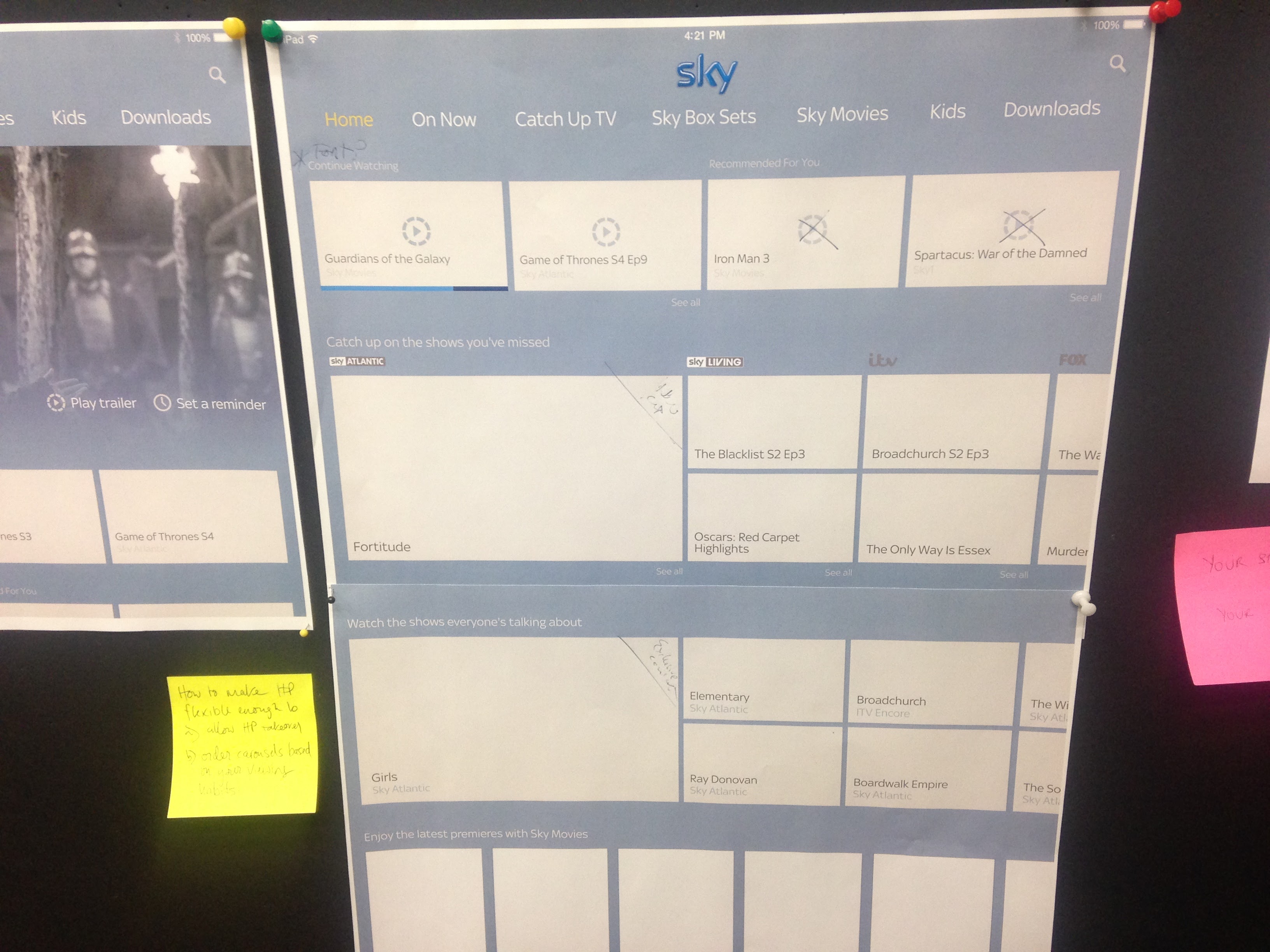
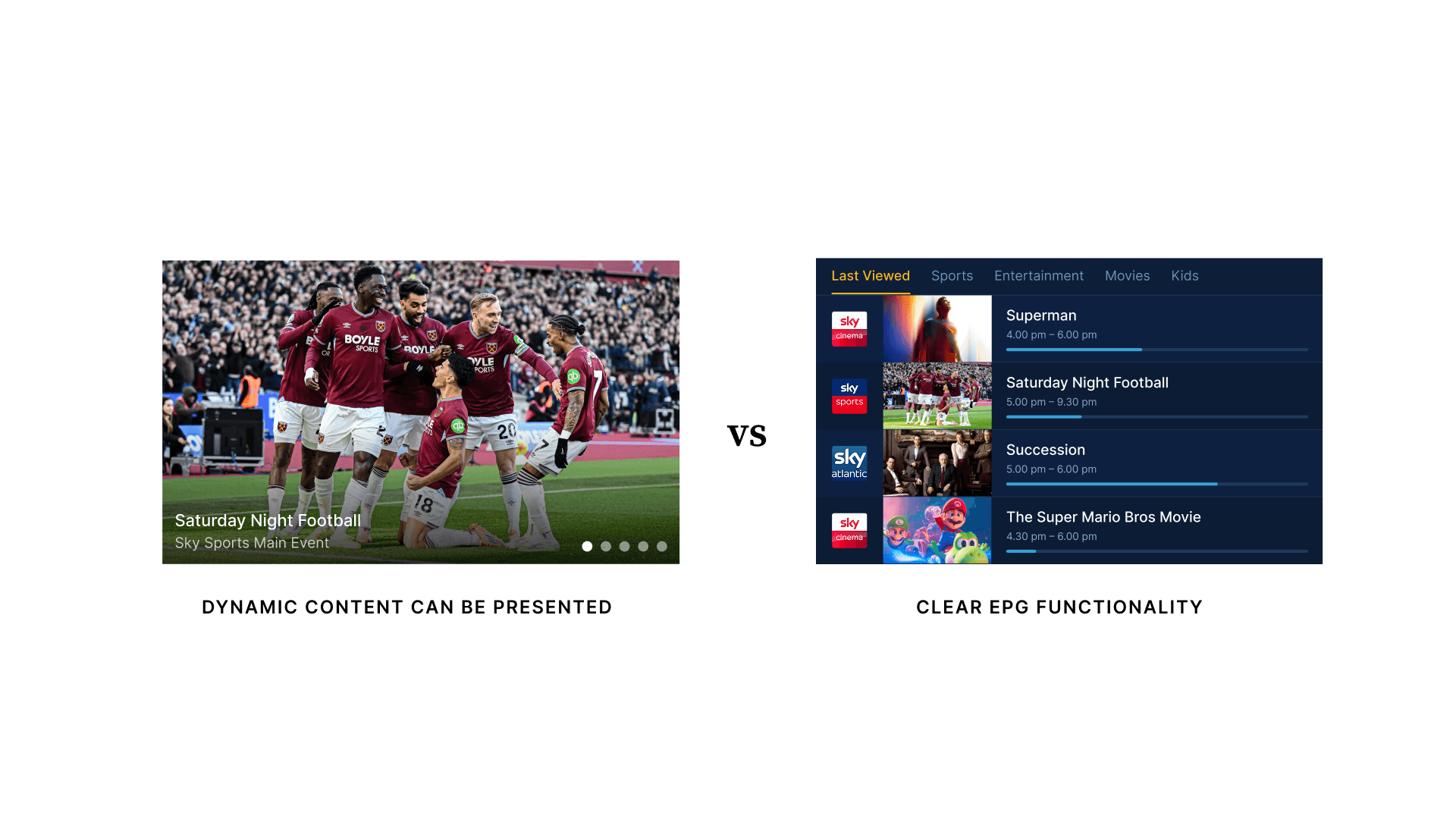
Through many design layout iterations, including a dedicated mini EPG section, we landed on two core screen composition concepts.
Direction 1 leaned into a rich, editorial layout: fewer pieces of content, presented with more visual weight — including a much larger hero section designed to give Live Sky exclusive events, such as Premier League football, the prominence they deserved.
Through prototype testing the two concept models with real users, we validated that the editorial approach - content-first, performed better. The evidence leant in to the notion that users didn't want a catalogue; they wanted to be drawn in.

Testing results
Through prototype testing the two concept models with real users, we validated that the dynamic approach was favoured (9 out of 11 users)
The carousel UI pattern encouraged exploration and made discovery more accessible.
User testing revealed the mini EPG pattern too intricate to use, compounded by conflicting vertical scroll directions
What we built
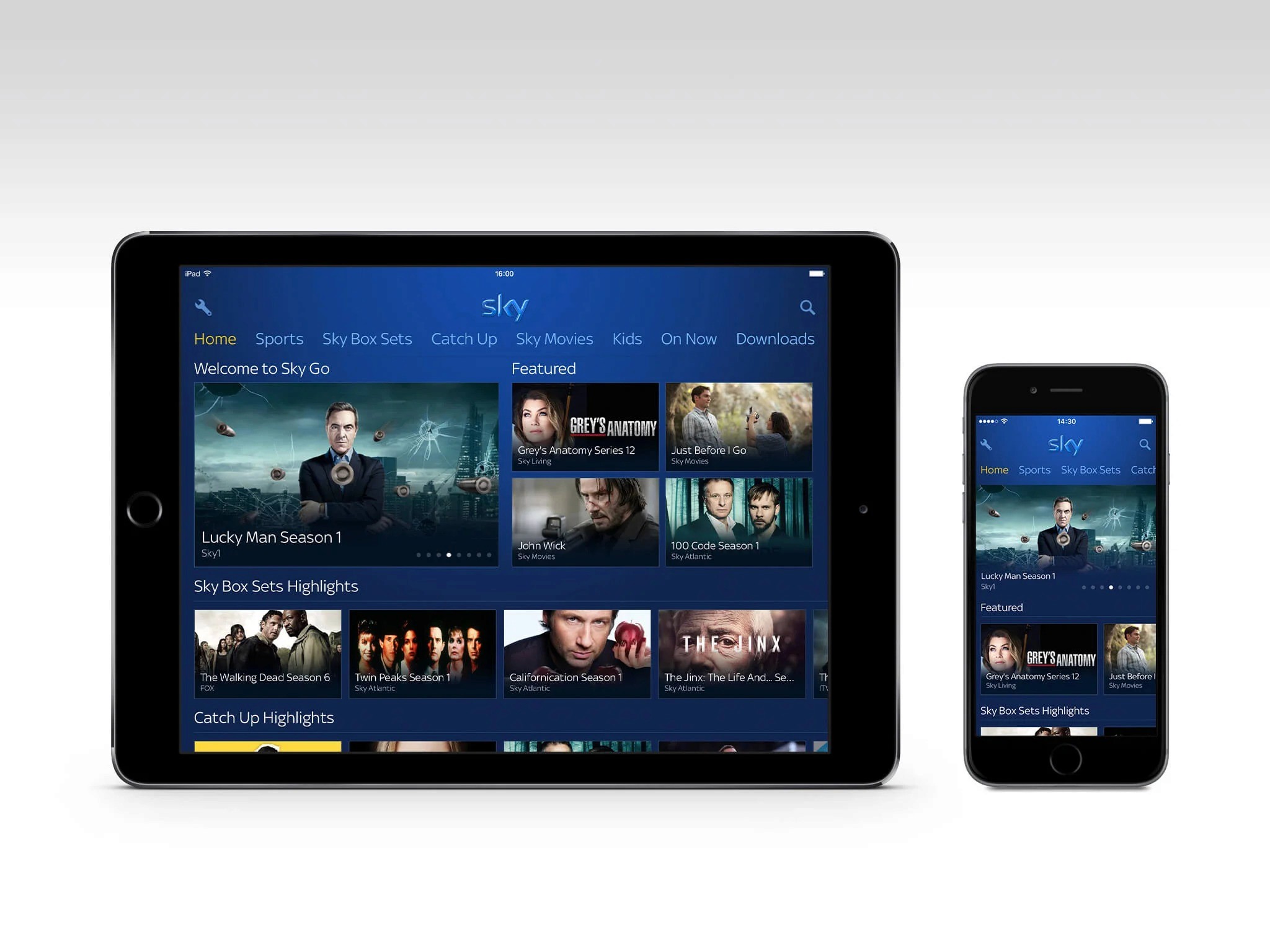
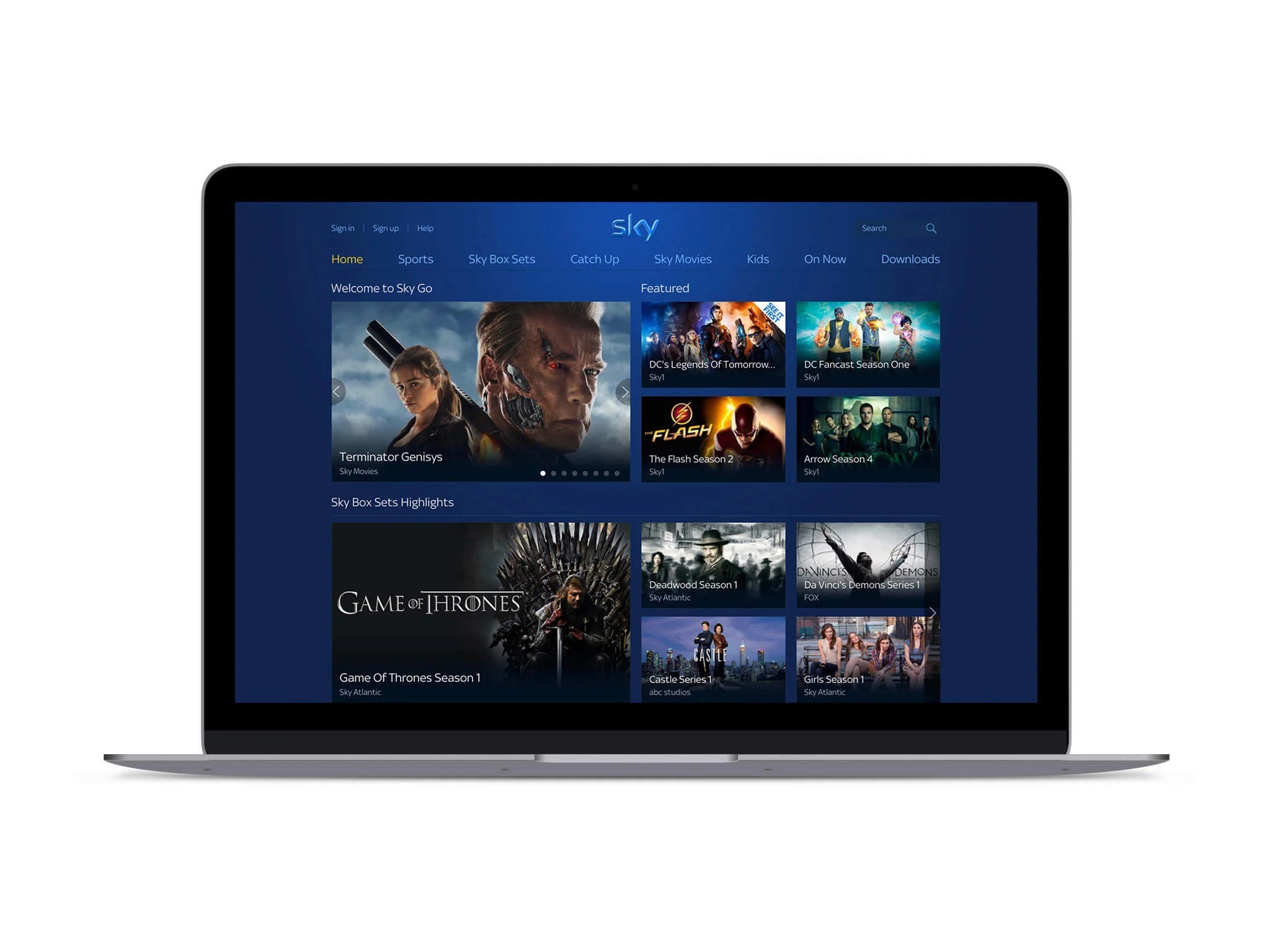
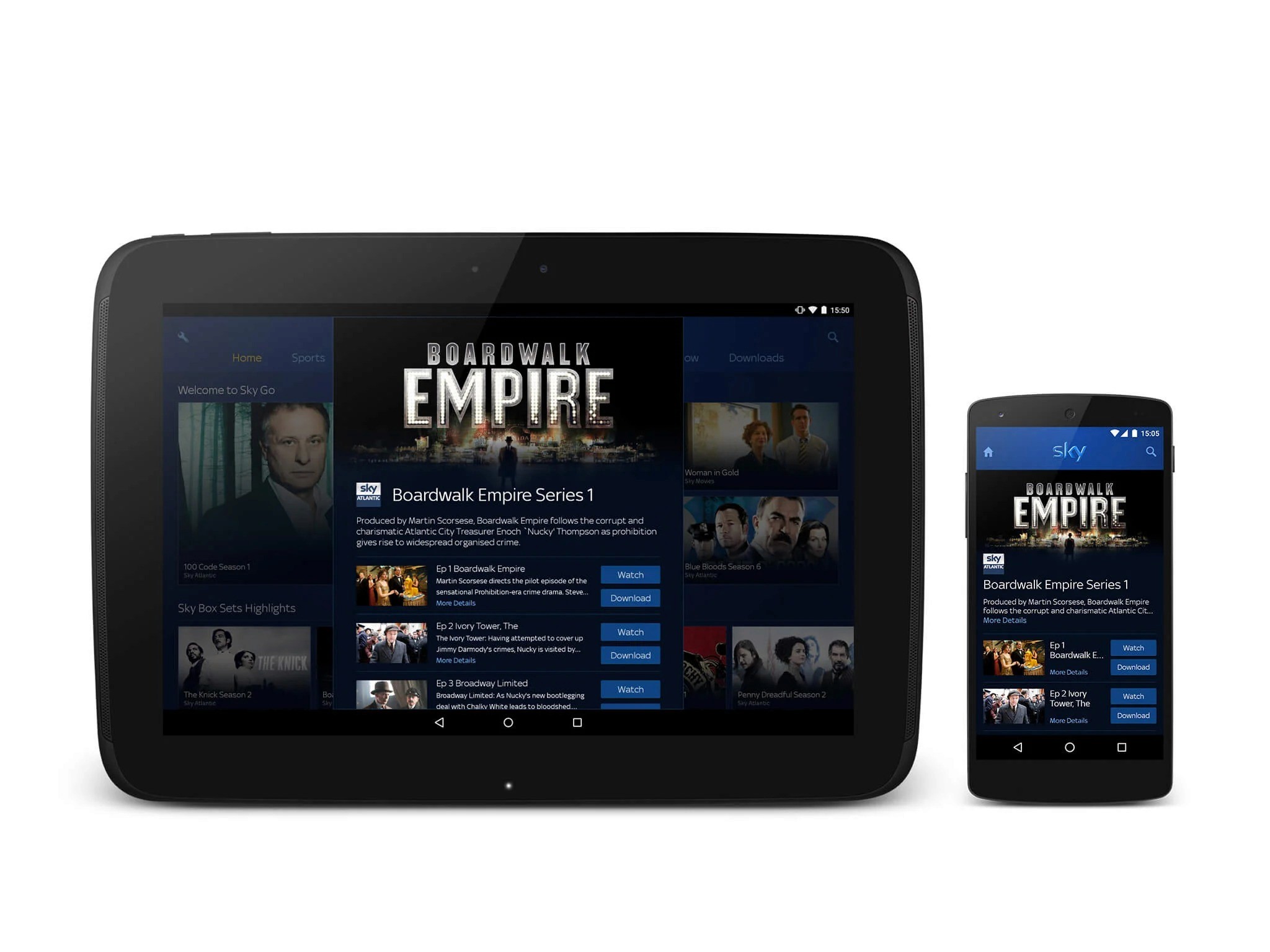
We reinvented the landing experience around a rich, visually driven layout that put shows and movies front and centre. Rather than asking users to browse, the new homepage was designed to pull them toward something worth watching immediately.
Ruthless cross-platform consistency. As a multi-platform product spanning mobile, tablet, web and console, Sky Go's navigation had historically felt disjointed — each platform had drifted in its own direction. We introduced a unified navigation pattern that played to each platform's interaction strengths while maintaining a consistent visual and structural identity across the whole Sky Go family.
A refined visual language. The redesign aligned Sky Go with the wider Sky brand evolution happening at the same time as Sky+HD EPG.
This brought a premium, cinematic aesthetic to the mobile experience.
Launch and Impact
Sky's official press release described the January 2016 launch as the "biggest ever redesign" of Sky Go, the leading mobile TV service in Europe, with a "more engaging and intuitive" experience directly reflecting the navigation and discoverability problems the project was built to solve.
By the end of the 2016 financial year, Sky Go had reached 10 million registered homes — up from 5.8 million at the start of the project. That represents a 72% increase in registered users over the period spanning the redesign.
The redesign also delivered a positive app store rating boost with an average of 4.0 stars, up from 2.9 at the start of the project

© 2026 Simon Wessely